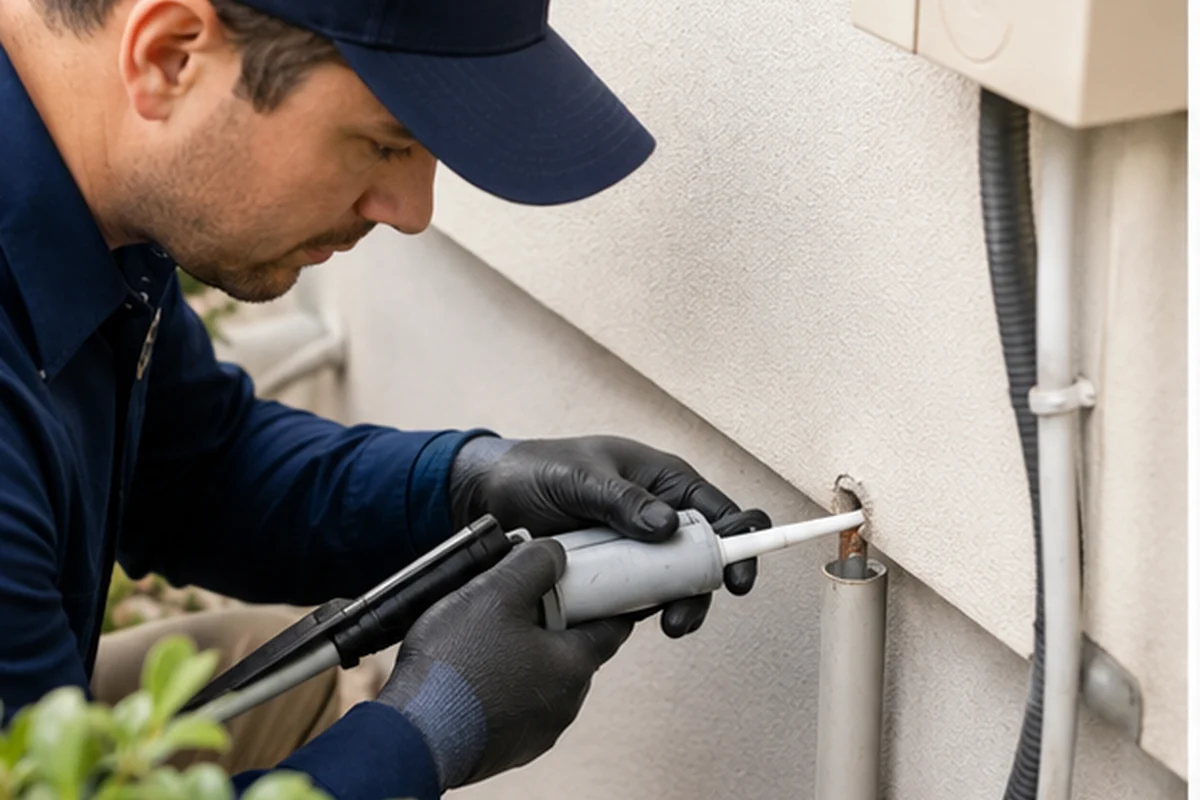
Request a Jacksonville pest reinspection when activity returns after treatment and compare identity, zones, products, entry, conditions, and contract terms.
- Bring the prior service record
- Map all post-service sightings
- List building or weather changes
- Read the re-service conditions
Jacksonville recurring pest treatment service decision for Jacksonville properties
Returning activity should trigger a documented comparison with the original target and service record. A commercial pest-control decision starts with the pest or evidence, the exact property zone, the timing, and the conditions that support activity. A generic treatment package can miss the difference between an exterior invader, an indoor breeding population, a wood-destroying organism, a rodent entry route, or activity moving through connected occupancy. The inspection should preserve those differences until identification and distribution support a written plan.
Record the first and most recent sighting, room or exterior zone, time of day, number and life stages, recent rain or building work, moisture, food or storage, travel or deliveries, and every product or trap already used. Include children, pets, aquariums, food handling, allergies reported for planning, access restrictions, and photographs. This history improves routing but does not confirm species, medical cause, safety, or treatment success from a phone description.
- original and current identification
- treated and untreated zones
- customer and property corrections
- follow-up and contract trigger
Jacksonville recurring pest treatment evidence collection without spreading activity
Preserve useful evidence without moving an infestation through the property. Clear photographs with a familiar object for scale, a safely contained specimen, intact mud tubes, cast skins, wings, gnawing, trails, nesting material, monitoring captures, or room-level notes can improve identification. Do not carry mattresses, boxes, appliances, food, linens, or furniture from an affected zone into clean rooms simply to prepare for the visit.
Avoid layering store products, foggers, repellents, baits, cleaners, and improvised chemicals before inspection. Mixed applications can change movement, remove evidence, contaminate bait placements, create exposure concerns, and make the treatment history difficult to interpret. Keep the original packaging and application date when a product has already been used, ventilate or isolate only as directed on its label, and report any exposure or urgent health event to the appropriate emergency or poison resource.
- Photograph evidence in its original zone
- Contain a specimen only when safe
- Record prior products and dates
- Avoid moving affected items through clean areas
Jacksonville recurring pest treatment pest identification and activity map
Identification combines specimen characteristics with behavior, habitat, and distribution. For this request, useful evidence can include original service record, new specimen or photograph, monitoring changes, and entry and habitat changes. Size alone can mislead, and a customer name such as water bug, ant, termite, or mouse can group very different targets. Monitoring and professional specimen review are appropriate when a photograph is blurred, activity is intermittent, or treatment categories would change with the identification.
The activity map divides the property into interior living or work zones, the building envelope, utility and service routes, storage and receiving, waste, drainage, and landscape. Each observation receives a location, date, condition, and confidence level. This prevents one sighting near a sink from becoming a whole-property assumption and helps the proposal distinguish an active source, a travel path, a conducive condition, and an area with no evidence during the accessible inspection.
- original service record
- new specimen or photograph
- monitoring changes
- entry and habitat changes
Jacksonville recurring pest treatment entry, food, water, and harborage conditions
Treatment works inside a physical system. Pests respond to gaps, doors, soffits, pipes, drains, cracks, vegetation contact, soil, mulch, containers, standing water, condensation, leaks, food residue, cardboard, clutter, animal feed, waste, deliveries, and neighboring occupancy. For this topic, the condition review emphasizes missed source or route, shared walls or neighboring pressure, weather and exterior activity, and preparation and sanitation limits. A condition can support activity without proving that it caused every observation.
Corrective actions should be assigned to the responsible person and connected to a location. Pest service may include accessible exclusion or source reduction, while carpentry, roofing, plumbing, drainage, cleaning, landscaping, wildlife, or building-envelope work may require a different provider. Sealing every opening before active rodents or stinging insects are assessed can trap animals or redirect activity, so sequence matters as much as the material used.
- missed source or route
- shared walls or neighboring pressure
- weather and exterior activity
- preparation and sanitation limits
Jacksonville recurring pest treatment treatment scope and product-label boundaries
A treatment proposal should state the target pest, inspected and treated zones, method, preparation, expected customer actions, access, monitoring, visit sequence, exclusions, and written follow-up trigger. For this topic, scope may include reinspection, treatment adjustment, monitoring revision, and entry or habitat correction. Product choice must remain connected to the registered label, application site, target pest, rate, method, restrictions, ventilation, re-entry, weather, and non-target considerations that apply to the real job.
Words such as green, natural, safe, pet friendly, family friendly, low toxicity, or harmless should not replace product identity and instructions. Risk depends on the product, formulation, application, exposure route, site, occupants, and label compliance. A responsible service explains preparation and post-service directions for the chosen method without promising zero exposure or universal suitability. Nonchemical measures and habitat corrections should be included when they materially support the target plan.
- reinspection
- treatment adjustment
- monitoring revision
- entry or habitat correction
Jacksonville recurring pest treatment one-time treatment and recurring service comparison
A one-time service can fit a bounded event with confirmed identity, accessible source, correctable entry or habitat, and a treatment method that does not require a staged cycle. Recurring service can fit ongoing exterior pressure, commercial sanitation cycles, shared walls, repeated deliveries, monitoring-dependent rodents, mosquitoes, or pest biology that requires scheduled review. Frequency should follow the identified program and label rather than a universal monthly claim.
Compare the first inspection, included pests, excluded pests, interior and exterior zones, monitoring devices, customer tasks, re-service terms, cancellation, renewal, price changes, termite or specialty exclusions, and records supplied. A low introductory price may cover fewer pests, less inspection, or a longer commitment. A longer agreement can still be unclear when the service trigger, covered activity, preparation, and follow-up responsibilities are not defined.
- Bounded one-time target and source
- Recurring monitoring or exterior pressure
- Written included and excluded pests
- Defined follow-up and cancellation terms
Jacksonville recurring pest treatment preparation for people, pets, food, and property access
Preparation should be specific to the selected method. It may include access below sinks, reduced clutter in a limited zone, covered or removed food, secured pets, aquarium instructions, laundry or vacuuming, bed access, cleared wall edges, gate codes, attic access, delivery coordination, or manager notice. Unnecessary whole-property preparation increases disruption and can move pests or belongings without improving treatment.
Customers should disclose children, pregnancy, respiratory or sensitivity concerns, pets, birds, reptiles, fish, service animals, food production, medical equipment, and any area that cannot be vacated or ventilated as instructed. The licensed operator and product label determine the applicable precautions. A website cannot provide a universal re-entry time because products, methods, sites, and label language differ. Written instructions should control over a general article.
- Targeted access preparation
- Food and sensitive-item protection
- Pet and aquarium disclosure
- Written method-specific instructions
Jacksonville recurring pest treatment property-specific pest management coordination
The same evidence creates a different plan across homes, apartments, food-service sites, and warehouses and offices. Homes add family routines, pets, kitchens, attics, garages, yards, and personal belongings. Rentals add resident notice and owner approval. Multifamily sites add connected units, shared utilities, common areas, trash, building identifiers, and adjacent-unit decisions. Commercial properties add operating hours, customers, receiving, inventory, sanitation records, equipment, audits, and manager accountability.
Submit the exact Jacksonville address and ZIP, building and unit or suite, evidence zone, access contact, approving contact, occupied hours, food operations, recent deliveries, prior vendor records, and preparation limits. These details improve route and scope but do not guarantee coverage or timing. Jacksonville Beach, Atlantic Beach, Neptune Beach, and Baldwin are separate locations and should not be assumed inside the service area without explicit confirmation.
- homes
- apartments
- food-service sites
- warehouses and offices
Jacksonville recurring pest treatment Jacksonville pest-control price factors
A responsible price follows identification and scope. Pest type, activity distribution, property size, number of units, access, preparation, infestation level, treatment method, product and equipment, exclusion, sanitation or habitat work, monitoring devices, visit sequence, commercial documentation, and contract terms can change the total. A citywide price cannot responsibly include conditions that have not been inspected.
Compare proposals line by line: target pest, inspected zones, treatment zones, methods, preparation, products or documentation, initial and follow-up visits, excluded pests, exclusion work, customer corrections, re-service conditions, renewal, cancellation, payment, and records. A lower total can represent a smaller scope. A bundle can hide that termite work, bed bugs, mosquitoes, wildlife, exclusion, or commercial reporting is not included.
- Target pest and activity distribution
- Property access and preparation
- Treatment, exclusion, and monitoring scope
- Visit sequence and written agreement
Jacksonville recurring pest treatment Florida license and written-service verification
Structural pest-control businesses serving homes or structures in Florida should be verified through the official Florida Department of Agriculture and Consumer Services licensing resources. Confirm the legal business, current location license, certified operator, and certification category connected to the offered work. A truck, uniform, website badge, salesperson statement, or general business registration is not a substitute for the current regulatory record.
Wood-destroying-organism work requires special attention to inspection limits, organism named, treatment, structure covered, renewal, retreatment, damage provisions, exclusions, transfer, Formosan termite language, and customer duties in the written contract. Commercial service also needs records tied to the actual site and program. No page should invent insurance, certification, bond, guarantee, response time, product safety, or elimination results before the operator provides evidence.
- Verify the legal pest-control business
- Confirm the certified category for the work
- Read specialty and termite contracts
- Reject unsupported safety and guarantee claims
Jacksonville recurring pest treatment service record, monitoring, and corrective actions
The completion record should identify date, technician, property and zone, target pest, observations, treatment or nonchemical method, product information as required, monitoring points, preparation completed, inaccessible areas, customer corrections, follow-up date or trigger, and written terms. Commercial records should connect each device, finding, corrective action, and manager response to a stable site map rather than a generic invoice.
Monitoring does not mean leaving devices without interpretation. Device condition, capture, consumption, pest stage, trail change, new entry, sanitation, moisture, structural work, weather, and occupant reports can change the next action. A documented no-activity inspection is different from a guarantee that pests are absent from concealed or inaccessible areas. The plan should state what evidence changes the scope and who approves that change.
- Inspected and treated zones recorded
- Product or method documentation retained
- Corrective actions assigned
- Follow-up trigger stated
Jacksonville recurring pest treatment booking checklist and commercial next step
Prepare safe photographs, a contained specimen when appropriate, sighting dates and rooms, previous invoices and product names, termite or recurring-service contracts, building or unit details, access instructions, pet and occupant notes, food-operation schedule, and the person authorized to approve service. Do not clean away all evidence, break every mud tube, discard affected furniture, move stored goods, or close suspected rodent entries before receiving instructions.
A strong commercial decision can be audited from reported evidence to identification, mapped zone, supporting condition, treatment boundary, preparation, price, approval, service record, and follow-up. Barrier Coast Pest uses that sequence to help Jacksonville property owners compare pest-control service without substituting a generic article for inspection or promising an outcome that belongs to a licensed operator, product label, written contract, property manager, veterinarian, physician, or other qualified provider.
- Evidence and timing prepared
- Prior treatment and contracts available
- Occupant and access conditions disclosed
- Authorized contact ready for approval
Recurring Pest Treatment Review Inspection, Scope, and Follow-Up Answers
Jacksonville recurring pest treatment identification from a photograph
01
A clear photo or safely contained specimen can improve routing, but activity pattern, habitat, property zone, and field inspection may be required before selecting a treatment category.
Jacksonville recurring pest treatment fixed-price availability
02
A responsible fixed price follows pest identification, affected zones, property size, access, preparation, treatment method, monitoring, exclusion, visit sequence, and written terms.
Jacksonville recurring pest treatment children and pet preparation
03
Disclose every occupant and animal before service and follow the written instructions for the selected product or method. Universal safety or re-entry claims are not appropriate.
Jacksonville recurring pest treatment Jacksonville service coverage
04
Submit the exact Jacksonville address and ZIP. A neighborhood page does not guarantee dispatch, timing, or coverage in separately administered nearby municipalities.